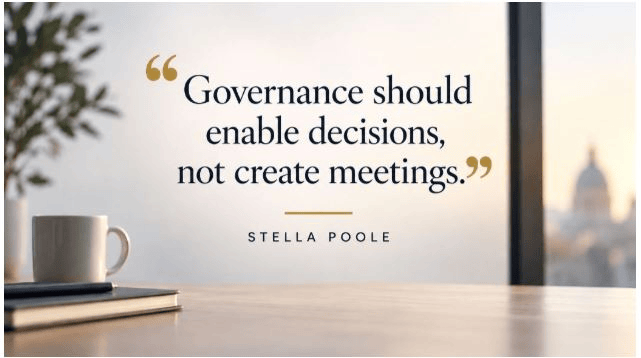



Recently, I found myself in a thoughtful conversation with a CIO colleague about enterprise integration strategy. On the surface, the discussion appeared entirely technical. We were debating the future direction of integrations surrounding Oracle Fusion and whether Azure Integration should become the default strategic platform for all integrations across the organisation.
His position was clear and understandable. We are fundamentally a Microsoft organisation, therefore Azure Integration should sit at the centre of the integration landscape, including for Oracle Fusion.
My perspective was different, although not oppositional. I was not arguing against Azure Integration, nor was I suggesting that Oracle Integration Cloud should automatically become the answer to every Oracle-related integration requirement. My concern centred on the reasoning itself.
I questioned whether organisational identity alone is a sufficiently robust basis for long-term architectural decisions. That distinction matters more than many organisations realise.
Technology decisions often begin innocently. A platform becomes strategically preferred. A supplier relationship deepens. Internal capability grows around a specific ecosystem. Over time, however, preference can quietly evolve into doctrine. Strategic direction slowly hardens into unquestioned assumption.
What stayed with me after the conversation was not disagreement. Neither of us was necessarily wrong. The discussion instead exposed something much larger that increasingly shapes enterprise technology leadership across many institutions.
Organisations are no longer simply selecting technologies. They are unconsciously building technological identities around themselves.
The Rise of Technology Identity
Enterprise technology has gradually developed its own forms of institutional tribalism.
Statements such as “we are a Microsoft organisation,” “we are cloud first,” or “we standardise on strategic vendors” are now deeply embedded into leadership conversations across large enterprises. These phrases often sound mature, decisive, and strategically coherent. In many cases, they originate from entirely rational intentions.
Most CIOs inherit estates shaped by years of fragmented decision-making, duplicated tooling, disconnected systems, unclear ownership, and inconsistent governance. The instinct to simplify complexity is therefore understandable. Standardisation can reduce operational sprawl, strengthen governance, improve supportability, and create clearer delivery models.
Problems emerge when standardisation evolves beyond evidence-based strategy and becomes ideological certainty.
Technology estates are not static diagrams. They are living operational ecosystems shaped by people, funding models, institutional politics, supplier dependencies, organisational maturity, internal capability, and delivery pressure. Decisions that appear elegantly simple at governance level often behave very differently under operational conditions.
Reducing all of that complexity into a single statement such as “we are a Microsoft organisation” may create clarity in executive conversation, but clarity in conversation does not automatically create resilience in practice.
Large institutions rarely struggle because they lack strategic statements. They struggle because simplistic strategic narratives sometimes conceal operational complexity until that complexity eventually surfaces elsewhere.
The Architecture Decisions That Age Badly Rarely Look Dangerous at the Beginning
One of the most deceptive aspects of enterprise technology is that poor strategic decisions rarely fail immediately. Most of them initially appear successful.
The programme completes. The migration succeeds. Governance appears cleaner. Architecture diagrams become easier to explain. Executive reporting improves. Standardisation metrics look positive.
The consequences tend to emerge much later, often years after the original decision-makers have moved on.
Delivery pipelines begin slowing because every integration now depends on a single central function. Specialist domain knowledge becomes diluted because operational teams are forced into overly generalised ownership models. Transformation programmes start competing against one another for finite integration capacity. Agility gradually erodes while governance structures become increasingly heavy.
Delivery friction is one of the least visible yet most expensive problems within large organisations. Many institutions spend enormous amounts modernising technology while unintentionally building operational bottlenecks around the very teams responsible for enabling change.
Architecture conversations often focus heavily on platforms while underestimating organisational design. In reality, organisational design frequently determines whether technology strategy succeeds or slowly becomes restrictive over time.
Centralisation Creates Different Risks Than Many Organisations Anticipate
Centralisation remains one of the most attractive concepts within enterprise technology leadership because it creates the appearance of control.
- One integration team.
- One strategic platform.
- One governance model.
- One support structure.
Initially, this can appear highly efficient.
Sometimes it genuinely is.
Other times, centralisation quietly transforms into organisational dependency.
Every new delivery requires negotiation over capacity. Every transformation programme enters the same queue. Every domain becomes dependent on the same constrained operational function. Eventually, the integration capability itself becomes one of the largest constraints on institutional agility.
None of this means decentralisation is automatically superior. Uncontrolled fragmentation creates serious problems of its own.
Mature enterprise leadership is not about choosing extremes. The more important question is whether organisations fully understand the operational trade-offs they are creating.
Technology strategy is never only about platforms. It is also about the shape of organisational dependency being designed around those platforms.
Native Capability Is Not Automatically Unsophisticated
There is an increasingly common tendency within parts of enterprise technology leadership to dismiss vendor-native tooling as strategically inferior, as though using a platform designed specifically for a product somehow reflects weak architectural thinking or an absence of enterprise maturity.
That assumption deserves far greater scrutiny than it often receives.
Native capability exists for operational reasons, not merely commercial ones.
Oracle Fusion Cloud Applications integrated through Oracle Integration Cloud introduces advantages that extend well beyond technical convenience. Native adapters, alignment with Oracle’s quarterly release cadence, simplified authentication models, reduced translation overhead, prebuilt orchestration capability, and clearer support ownership all contribute toward operational stability and delivery efficiency over time.
None of those advantages automatically make Oracle Integration Cloud the correct answer in every scenario. Equally, however, dismissing those benefits purely because an institution identifies more strongly with another ecosystem risks allowing organisational preference to override architectural evidence.
Enterprise technology decisions become dangerous when institutional identity starts carrying more weight than operational reality.
None of those benefits automatically make Oracle Integration Cloud the correct answer for every organisation.
Equally, however, dismissing those advantages solely because an institution identifies more strongly with Microsoft would be overly simplistic.
Mature architecture requires evidence-based reasoning.
- What operational risks are introduced?
- What delivery constraints emerge?
- What capability gaps exist internally?
- What support boundaries become more complex?
- What happens during major upgrades?
- What becomes harder to scale?
- What becomes dependent on scarce organisational capacity?
These are the questions that determine whether strategy remains sustainable over time.
The Most Fragile Technology Estates Often Begin With Absolute Thinking
The longer I spend around large-scale enterprise environments, the more cautious I become of absolute strategic positions.
Statements such as “everything should use one platform,” “one team should own all integrations,” or “all strategic capability should sit within a single ecosystem” often sound powerful within executive discussions because absolutes create the impression of certainty.
Large institutions are naturally heterogeneous environments. Different functions operate at different speeds. Different systems carry different operational risks. Different teams possess different expertise. Different suppliers evolve differently. Different domains require different forms of agility.
Attempting to impose complete uniformity onto naturally complex ecosystems can unintentionally create fragility rather than resilience.
The most mature enterprise architectures are often less ideological than people expect.
- They standardise where standardisation creates measurable value.
- They optimise where domain-specific capability matters.
- They permit flexibility where flexibility improves resilience, delivery speed, or operational effectiveness.
- They govern architectural principles rigorously without turning technology platforms into institutional doctrine.
That approach may appear less emotionally satisfying because it lacks the simplicity of a single strategic narrative. Operational maturity, however, is rarely simplistic.
The Most Important Part of the Conversation
What mattered most about the conversation with my colleague was not whether Azure Integration or Oracle Integration Cloud is ultimately “better.” That is not actually the interesting part.
The important part was recognising that architecture decisions deserve deeper examination than organisational identity alone – because technology decisions are never only technical.
- They shape delivery models.
- They shape organisational dependency.
- They shape operational resilience.
- They shape team structure.
- They shape agility.
- They shape future constraints.
- They shape how quickly institutions can evolve.
… and perhaps most importantly, they shape what becomes difficult later. That is why evidence-based decision-making matters so much in enterprise technology leadership. Not because evidence guarantees perfect outcomes – but because once organisations stop questioning their assumptions, strategy quietly hardens into ideology.

Discover more from Stella Poole
Subscribe to get the latest posts sent to your email.